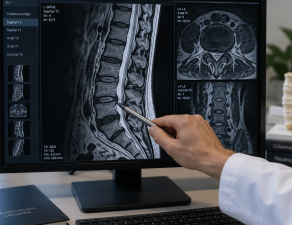
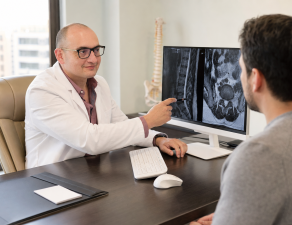
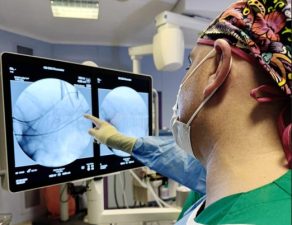
This condition is the leading cause of spinal surgery in patients over 65. A narrowing of the spinal canal compresses the nerves that run through that area of the back. Surgery is often the only option to address the symptoms of this condition, which can affect both the lumbar and cervical spine. We discuss the symptoms of spinal canal stenosis.
Who hasn't suffered from back pain at some point in their life? Surely most of you have experienced some discomfort in that area of the body. According to various studies, around 85% of people suffer from back pain at some point in their lives, affecting eight out of ten. The type, intensity, and duration of this condition must also be taken into account in order to classify it as acute, when it appears suddenly and persists only for a few days or weeks, or chronic, when it lasts more than three months. In the latter case, the problem becomes more serious due to the symptoms of spinal stenosis.
Narrowing of the spinal canal
Within that percentage of people who suffer from chronic back problems, it primarily affects older adults. Focusing on a spinal condition that Dr. Mosqueira understands and treats perfectly, Spinal stenosis occurs mainly in patients over 65 years of age, becoming the leading cause of spinal surgeryDue to degenerative causes, the bone tissue and joints in the spinal canal may increase in size, as well as the ligaments found in this area.
As a result of this, The space through which the nerve roots pass is narrowed. If this continues, they can become compressed and cause symptoms.In the case of stenosis of the lumbar canal (lower back), it can be associated with the appearance of one or more herniated disks, which further compresses the nerve roots; while in cervical canal (neck) stenosis, the entire spinal cord can even be compressed, causing damage to it.
Lower limb discomfort: symptoms of spinal canal stenosis
In another article previously published on our website, we already dedicated a few words to the expansion and growth of pain, but why we feel discomfort in the lower extremities, especially when we're talking about lumbar spinal canal stenosis or lower back pain? A central problem can lead to gradually progressive spinal canal stenosis-related symptoms that spread to other parts of the body.
This is very clear and easy to understand, because nerves are responsible for the movement of the muscles and joints in those parts of the body. When they feel pressured or strangled, they lose their functionality, they cannot correctly send orders to the legs., This can cause pain, tingling, numbness in the legs when walking, loss of strength in severe and prolonged cases, etc.
Surgical intervention as the only option for severe pain
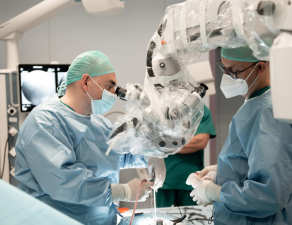
Physical therapy or surgery. These are the two options considered depending on the degree of tightness caused by the stenosis. It's clear that timely treatment reduces pain and prevents the problem from getting worse, but Sometimes, in a severe case, conservative therapy is not useful. This leaves surgery as the only option to manage the pain.. For surgical intervention there are several possibilities of action depending on the case, what is clear is that the surgical microscope is the main weapon.
On one side is the decompressive microlaminectomy, in which a small incision of about three centimeters is made in the back following the line of the spine. This is done in the area where the stenosis is to remove part of a vertebra that is causing compression of the nerves and thus free them. And, on the other hand, the surgical procedure of microlaminoforaminotomy, causing pressure to be released from a nerve while widening the opening in the back where the nerve roots exit the spinal canal.
If you would like information on a specific problem or technique, please do not hesitate to contact us at 951 00 66 38. We will be happy to assist you with whatever you need.
Editorial Vere Álvarez N