
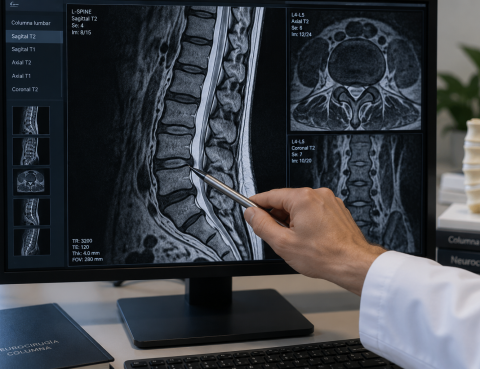
Seeing "disc protrusion," "herniation," or "extrusion" on an MRI scan raises many questions. We explain what these terms mean and why the diagnosis also depends on the symptoms and the examination.

Walking for a few minutes and then needing to sit down due to pain, heaviness, or tingling in the legs can be a characteristic symptom of lumbar spinal stenosis. We explain why this occurs and how it is assessed.
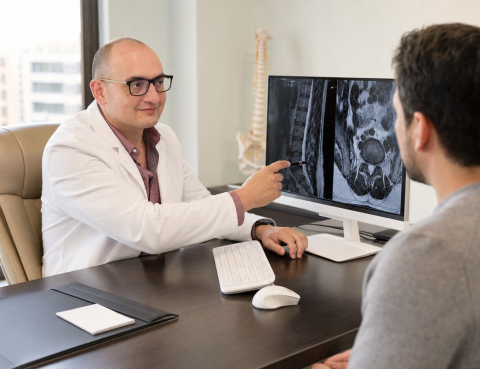
Receiving a recommendation for spinal surgery can raise concerns. A second, specialized opinion can help review the diagnosis, assess the available options, and make a more informed decision.

Difficulty walking, loss of balance, or a feeling of heaviness in the legs may be related to cervical stenosis when there is involvement of the spinal cord.
Cervical nerve compression can cause pain, tingling, numbness, or weakness in the arm. We explain its causes, how it is diagnosed, and what treatments may be considered in each case.

Neck pain that radiates down the arm can be accompanied by tingling, altered sensation, or weakness. We explain its most common causes and when a specialist evaluation is needed.

A herniated disc is not considered serious solely based on the intensity of the pain. We explain which warning signs require immediate medical attention and when it is necessary to go to the emergency room.

Choosing the right professional is one of the first steps toward obtaining an accurate diagnosis and the most appropriate treatment for each patient. Receiving a diagnosis of a herniated disc or suspecting that the pain may be related to this condition generates one of the most common questions among patients: Which specialist treats a…

A herniated disc and spinal stenosis are two of the most frequent causes of lumbar nerve compression and require accurate diagnosis to choose the most appropriate treatment. To begin, let's answer the question: what is nerve compression? The spine protects the spinal cord and nerve roots…

A herniated disc and spinal stenosis are two of the most frequent causes of pain radiating from the back down the leg. Lower back pain is one of the most common health problems, but when that pain begins to spread to the buttocks, thigh, or even the foot, it usually indicates that…