More than 500 spinal surgeries in recent years attest to Dr. Bernardo Mosqueira's experience in microsurgical and minimally invasive surgical techniques.
Spinal surgery has evolved remarkably over the years thanks to the development of new surgical techniques and the improvement of visualization systems used in the operating room. "In my practice as a neurosurgeon specializing in spinal pathology, I have observed how these innovations have allowed us to address many spinal diseases with much greater precision," he explains. neurosurgeon Bernardo MosqueiraThanks to this, it is now possible to treat common problems such as herniated discs or spinal stenosis using procedures that directly address the cause of the pain while preserving healthy spinal structures as much as possible. Let's talk about minimally invasive spinal surgery in Spain.
This approach, known as minimally invasive spine surgeryIts aim is to relieve nerve compression and restore spinal function with the least possible impact on muscles, ligaments, and surrounding tissues. Below, we explain more details about this procedure and how Dr. Mosqueira has become one of Spain's leading specialists in the treatment of spinal pathologies.
What is minimally invasive spine surgery?
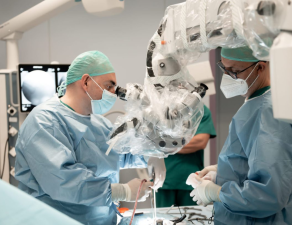
La minimally invasive spine surgery This approach encompasses a set of techniques that allow access to the affected area through smaller incisions and much more precise manipulation of the anatomical structures. In the operating room, surgical microscopes and magnification systems are used, enabling highly accurate work on the nerves and intervertebral discs. This type of approach facilitates the release of the compressed nerve while preserving as much healthy tissue as possible.
One of the most common interventions within these techniques is the microsurgery for herniated disc or known as microdiscectomyThis procedure allows for the removal of the portion of the disc that is compressing the nerve and relieves the symptoms caused by nerve compression. There are also specific techniques for Treat the spinal canal stenosis (we are talking about microlaminectomy), a condition in which the canal through which the nerves run narrows and causes lower back pain, leg weakness, or difficulty walking.
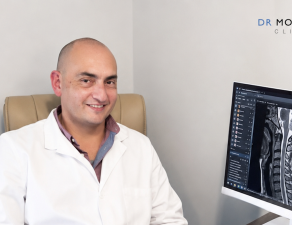
The use of these techniques by neurosurgeon Bernardo Mosqueira has made him a leading spine surgeon in Spain. At Clínica Dr. Mosqueira, located in Málaga, he treats patients from all over Spain and other parts of the world.
When is spinal surgery considered?
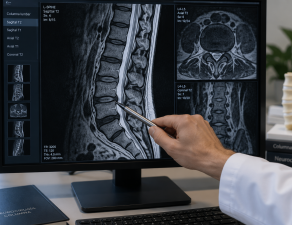
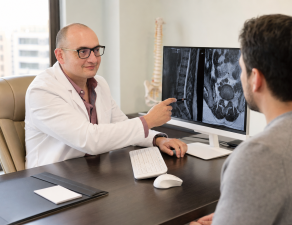
The decision to perform an intervention always begins with an accurate diagnosis. During the consultation, we dedicate time to listening to the patient, understanding the evolution of their symptoms, and conducting a thorough physical examination. Imaging tests, especially magnetic resonance imaging (MRI), allow us to confirm the diagnosis and correlate the radiological findings with the patient's symptoms.
In many cases, initial treatment focuses on conservative measures aimed at controlling pain and improving spinal function. When pain persists, significant nerve compression occurs, or quality of life is clearly affected, surgery may become the best therapeutic option. In these cases, minimally invasive techniques allow for addressing the underlying cause of the problem while maintaining a surgical approach that respects the anatomy of the spine.
Over the past few years, the number of patients seeking a definitive solution for back pain has grown significantly. Many people live with lower back or neck pain for extended periods before finally deciding to seek a specialist evaluation.
Accumulated experience in spinal surgery
This reality is also reflected in the surgical activity carried out at the Dr. Mosqueira Clinic in Malaga. "During the last five years we have performed more than five hundred spinal surgeries"This evolution reflects the growing number of patients seeking to regain their quality of life through microsurgical techniques," says the specialist in the treatment of spinal pathologies and minimally invasive spinal surgery in Spain.
A large part of these interventions are carried out through minimally invasive spine surgeryThis allows for the treatment of conditions such as herniated discs or spinal stenosis with less invasive surgery. "In the vast majority of cases, it's possible to resolve nerve compression without the need for spinal fixation with screws; only 5% of cases require screws. This facilitates a faster recovery and a gradual return to daily activities," explains Dr. Mosqueira. The experience accumulated in these types of procedures allows for an individualized assessment of each case and the selection of the most appropriate surgical technique for each patient.
Accumulated experience in spinal surgery
One of the aspects that patients value most is the recovery process after spinal surgery. Minimally invasive techniques aim precisely to reduce the surgical impact and facilitate a faster functional recovery. In most cases, the patient can begin walking a few hours after the procedure under medical supervision. From that moment, a progressive recovery begins, which depends on the condition treated and the individual characteristics of each person.
The goal is always to restore movement, relieve pain, and allow the patient to return to their normal daily activities. Thanks to minimally invasive spinal surgery in Spain, there are numerous benefits for the patient. If you would like to learn more about these benefits and receive the best diagnosis for your condition, please call us at +34 655 021 907 or +34 951 006 638. We are here to help!
FREQUENTLY ASKED QUESTIONS
Minimally invasive spine surgery includes surgical techniques that allow for the treatment of vertebral pathologies through smaller incisions. This enables more precise manipulation of the anatomical structures.
The most frequent spinal pathologies that we treat with this type of surgery are lumbar or cervical disc herniation and spinal stenosis.
Yes. Microsurgery for herniated discs is one of the most commonly used techniques within this surgical approach. It allows for the release of the compressed nerve through a precise procedure.
By better preserving muscle tissue and reducing surgical impact, many patients experience a faster functional recovery.
Each case must be evaluated individually by a spine specialist. The type of technique depends on the pathology, the patient's anatomy, and the diagnosis made during the consultation.
-
Hello, good morning. I would like to know the price of the C4C5 cervical disc herniation surgery and if the scar would be in front or behind the neck.
-
Hello, Gema.
To determine the price of the procedure, I would need to assess you in a consultation to determine the severity of your condition, the specific pathology, and your needs. Please call us at 655 021 907 or 951 006 638 so we can provide you with more information.
Regarding the scar, it would be on the back, but it is barely visible since it would be about 3-4 centimeters thanks to the minimally invasive techniques and the non-placement of plates/screws, the scar is minimal.Greetings and thank you.