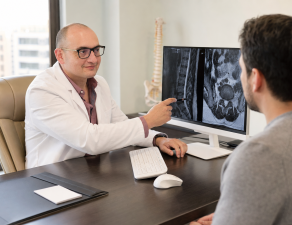
Trust and closeness are the basic pillars of a good doctor-patient relationship. People who go to the doctor seek and deserve to be treated cordially and respectfully, and to be able to talk with the professional to find the best solution. This will help create the right atmosphere in the consultation and allay all fears.
At Dr. Mosqueira Clinic, it is essential. For one reason or another, at certain times in our lives we have to go to the doctor, either for a consultation for a simple sprain, or, in more serious cases, for the need to undergo surgery. achieve a decent and deserved quality of lifeWe have the image of a doctor as someone who tests and examines us to give us a diagnosis and thus try to help and/or cure a health problem that may exist. The most important part is missing from that definition or belief, where the doctor-patient relationship is often forgotten.
"Just because I'm a doctor doesn't mean I'm better than anyone else.", says Dr. Bernardo Mosqueira. It has always been said that good relationships and good communication are based on trust. From There the nerves will be reduced, the fears will begin to go away, there will be fluidity in the relationship and bonds of friendship will be created. The doctor does not only have to limit himself to receiving the patient, examining him and giving a recommendation but also You should hold the patient's hand and have him position himself at the same level as you., although not everyone knows how to balance this situation and superiority prevails in a negative way.
The deliberative relationship between the professional and the patient
There are different types of relationships between doctor and patient. The following stand out: the authoritarian: where dialogue is null and medical decision prevails without reply. democratic or informative, in this the doctor adopts the role of consultant or counselor, leaving the decision in the hands of the patient without directly entering into the taking of opinions to please him in some way: And the deliberative, in which the role that the doctor adopts is that of a friend or teacher, a closeness between you and me. The latter, the deliberative one, is what should always prevail.
Both parties have their share of responsibility, and communication fosters trust and mutual respect. The doctor provides everything necessary to the patient and vice versa, in addition to explaining all possible solutions to a problem. to reach a shared and respectful decision. It's not difficult for healthcare professionals to behave this way, since if their goal is to help people, they must start by caring for them and treating them the same way anyone would want to receive.
“Networks have served to create bonds and allay fears.”
There is a misconception about social media. It's true that misuse can lead to serious consequences. But if actions are taken prudently and responsibly, they can have a positive side. We must be clear that traditional clinical relationships are the ones that should prevail in our daily work. We must not allow technology to creep into the doctor-patient relationship. Some studies claim that this has led to a distancing within the consultation, although this is not the case if the use is made correctly, as we say. In the case of our neurosurgeon Bernardo Mosqueira, Social networks and technologies have made the bond of friendship grow with his patients and followers, expanding his family as the days go by.
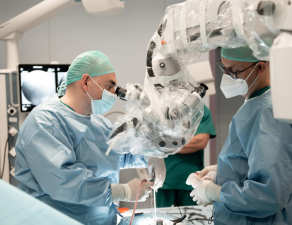
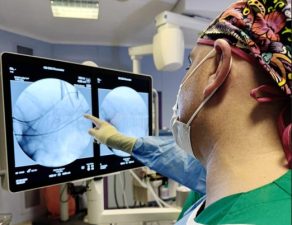
In this helping relationship, professionalism, active listening, and a compassionate attitude must exist to become the best guide, counselor, or clinical advisor possible. If you need a diagnosis or surgery, at Dr. Mosqueira Clinic we put every possible means at your disposal. We always like to inform our patients and friends, and also help them in any way possible. If you would like information about any medical topic or need a consultation with us, do not hesitate to contact us at 951 00 66 38, we will be happy to assist you with whatever you need.
Newsroom Vere Álvarez