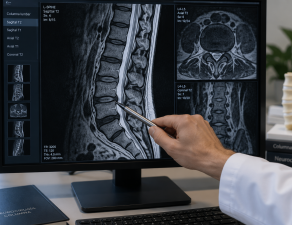
Back problems can be prevented with exercises that target this important muscle group to strengthen and protect our spine. Exercise is essential and helps improve our quality of life.
Our bodies are designed to perform at their best when they take care of themselves athletically and eat a healthy diet—that is, in other words, to enjoy a good quality of life. Among the different muscle groups that need to be cared for, the core becomes important.
This area is made up of different muscles such as the transverse abdominal muscles, the oblique muscles, the rectus abdominis, the diaphragm, the pelvic floor muscles, the multifidus muscles, and the erector muscles or lower back muscles.
La muscles that cover the spine It is worked thanks to core exercises, which help to avoid the risk of injuries, improve our posture, walk and perform any task characteristic of our daily life, that is, we use this set of
muscles to perform any movement. In short, the spine is the main structure of our skeletonWithout it we could not walk or stand, and it is what gives us balance and stability.
TRX exercise work
It is important train our stabilizing zone to strengthen and protect our spineFor this reason, we've proposed a series of exercises to develop this muscle group, designed by personal trainer Victoria Guerrero (nutri_entrena10 on Instagram), a graduate technician in physical education, sports nutrition, and dietetics. People with spinal problems, whether surgically treated or not, can do these exercises to regain muscle tone in the abdomen and lower back and protect their spine from problems.
To do them at home or outdoorsWithout having to go to a gym, we try to perform these exercises using suspension training, where we work with our own body weight: a TRX or harness attached to an anchor point. Its advantages include a complete full-body workout, toning, full core activation, and helping to reduce back problems and lower back pain.
Exercises such as the standard isometric plank or knee-to-chest plank, which strengthens the erector and transverse muscles of the back and also works the shoulders; sets for flexing, oblique, and biceps exercises; and TRX dumbbell exercises to work the lower body. For all of these exercises, proper posture is essential for effective performance. coordination, good technique and breathing.
Variations with medicine ball, bosu and fitball
It's important to note that the core can be developed with other variations, not necessarily using the TRX. This includes using a Bosu (a hemisphere, usually made of latex), to work on balance; a fitball for proprioception and thus strengthening the knee and ankle joints; or a medicine ball. With the latter, we can work on the obliques, for example, by performing leg-hanging twists, single-leg isometric planks, or lifting the scapulae with leg lifts.
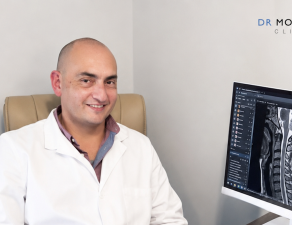
In the following video, our neurosurgeon Bernardo Mosqueira follows the instructions of personal trainer Victoria Guerrero, completing a training session with the aforementioned materials, showing examples of exercises for anyone who wants to start preventing back problems and protecting or strengthening their spine, erector spinae, and abdominal muscles.
Vere Álvarez N.
For more information about diagnosis and treatment you can call 951 00 66 38.