Editorial Vere Álvarez N
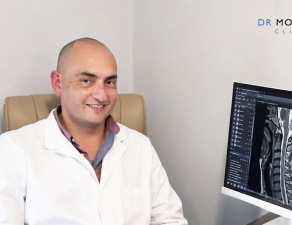
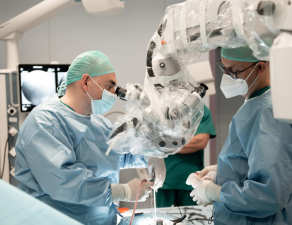
Dr. Bernardo Mosqueira helps patients regain their quality of life through the use of a surgical microscope. Thanks to his knowledge and the technique he uses, he eliminates these pathologies, both lumbar and cervical, and allows patients to be discharged from the hospital within 24-48 hours. The benefits of noninvasive microsurgery are numerous.
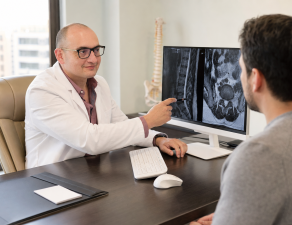
Feel, search, and find. These are the three verbs that mark the patient's process. First, they feel pain or manifest a problem that begins to incapacitate them. Between this step and the next, Sometimes the obstacle is letting the problem get worse.…This is where the search for solutions begins, and most importantly, finding them so that we can enjoy quality of life. It's common to hear from surgery patients about how they've been sent from one medical center to another, from one specialist to another, until they finally visited a neurosurgeon, in this case Dr. Mosqueira, to put an end to the ordeal.
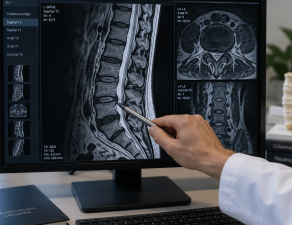
In addition to other problems, in Neurosurgery, thanks to the use of the surgical microscope, we find the best solution for spinal stenosis and herniated discs, both lumbar and cervical. It is worth remembering that stenosis is the leading cause of spinal surgery in patients over 65 years of age. It is estimated that eight out of ten patients of that age or older suffer from lumbar stenosis, becoming one of the main causes of disabilityHernias are also present in a large percentage of people, but they do not always become debilitating pain.
Specific treatments and techniques
The spine should be left in the hands of a specialized neurosurgeon. "In mild cases, conservative treatment may be indicated initially. Surgery would be indicated in cases where symptoms do not respond to these indications and in severe cases," says our neurosurgeon Mosqueira, who has no spinal stenosis or herniated disc that he can resist. Treatment with a surgical microscope brings successful results, ranging from rapid patient recovery to a high success rate with hardly any after-effects, but there is a specific technique for each problem.
What are the techniques used to resolve spinal canal stenosis so we can begin to enjoy our quality of life?
On the one hand, there is the decompressive microlaminectomy, through which a small incision of about three centimeters is made in the back, following the line of the spine, specifically, of course, in the area where the pain is to remove part of a vertebra that causes compression of the nerves and thus release them. And, on the other hand, we can use the surgical procedure of microlaminoforaminotomy, releasing pressure on a nerve while widening the opening in the back where the nerve roots exit the spinal canal. Everything will depend on the level, location, and location of the narrowing of the spinal canal.
And for herniated discs?
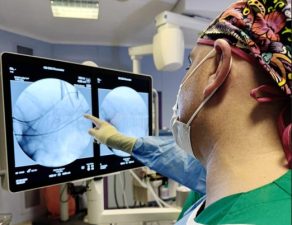
Always in mild cases, as we mentioned above, conservative treatment may be indicated. For herniated discs, the most frequently performed intervention in these cases is a microdiscectomy, which involves removing the intervertebral disc that is causing compression, that is, removing the dislocated disc fragment that is compressing the nerve roots. A titanium graft can be placed to replace the removed disc without causing any loss of cervical spine height, in cases where it is deemed necessary.
Different techniques, but always with the same protagonists: Dr. Mosqueira, his team and his microscope.
If you need a diagnosis or surgery, at Dr. Mosqueira Clinic we put every possible means at your disposal. We always like to inform our patients and friends, and also help them in any way possible. If you would like information about any medical matter or need a consultation with us, do not hesitate to contact us at 951 00 66 38, we will be happy to assist you with whatever you need.