Editorial Vere Álvarez N
This disease represents one of the most common nervous system problems in adults over 65. The lack of dopamine, due to the depletion of neurons that produce it, causes us to progressively lose control of movement.
The human body needs to move; it's a fact of life. It transmits, reacts, gestures, expresses, walks, runs, jumps, and much more. As we well know, movements are generated and regulated by the motor systems of the central nervous system. In our brain there are nerve cells responsible for managing movement, perform a coordinating function when sending messages to the muscles to act. These neurons produce a brain chemical called dopamine who acts as a messenger. So far, so good, The problem arises when, over time, neurons die or deteriorate.. Dopamine levels decrease, causing the progressive loss of the ability to coordinate movements, giving rise to various symptoms that lead to Parkinson's disease.
World Parkinson's Day
Since 1997, April 11 has been celebrated as World Parkinson's Day, coinciding with the anniversary of British neurologist James Parkinson, who discovered the agitating paralysis we now know as Parkinson's disease in 1817. The idea of this commemoration is to spread, through acts and activities, the realization of this pathology and raise awareness in society in general.l. Every year in Spain, around 10.000 new cases of the disease are diagnosed and currently there are more than 120.000 people who suffer from this chronic pathology, becoming the second most common neurodegenerative disease after Alzheimer.
La Spanish Society of Neurology (SEN) deduces that the number of those affected will double in 20 years and triple by 2050. Some chilling data that stem from the lack of knowledge of the origin of the anomaly, the cause is unknown, but professionals point to several factors that may influence it, such as genetics, aging, and/or environmental triggers. According to the SEN, 70% of people diagnosed in our country are over 65 years old.15% are under 50 years old and there are cases in which the disease begins in childhood or adolescence.
Symptoms and their improvement
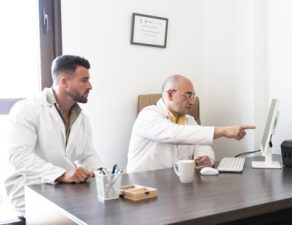
El Dr. Jesús Romero Imbroda explains that Parkinson's "is diagnosed based on the patient's symptoms, clinical examination and the results of complementary tests." Being a progressive diseaseSymptoms appear gradually, ranging from mild to severe. They may affect some areas before spreading to the entire body. Tremors, rigidity, mild or no facial expression and/or decreased movement may be visible from the early stages of this Parkinson's disease., although it depends on each person. Broadly speaking, we can say that we lose control and management of our movements. In addition to the symptoms mentioned above, others appear, such as a hunched posture or balance problems (instability), changes in speech (lack of clarity, pitch variation), and even in writing (difficulty and small handwriting).
Meanwhile, work is underway to find effective treatments to help minimize symptoms, as there is currently no cure for Parkinson's disease. Medications, surgery, and lifestyle changes (exercise to improve movement) are options that, depending on the individual, help alleviate the deterioration of patients with this disease and significantly improve their symptoms. "Every day we learn more about this condition and have better drugs to combat it," adds the neurologist.
At Clínica Dr. Mosqueira, thanks to the work of our neurologist Dr. Jesús Romero Imbroda, we are at your disposal to help you with whatever you need. If you need information about this disease, you can contact us at 951006638.