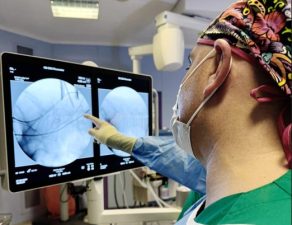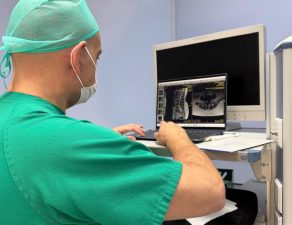
Pain, heaviness, or tingling that appears when walking and decreases when sitting or bending forward may be a characteristic clue to lumbar spinal stenosis.
"I walk for a few minutes and then I have to stop. When I sit down, I feel better again." This description is very common among patients with spinal problems and can provide an important clue about the origin of their symptoms. The relationship between lumbar stenosis and difficulty walking This occurs when narrowing of the spinal canal reduces the space available for the nerve roots in the lower back. Pain, heaviness, tingling, numbness, or weakness may occur in one or both legs when standing or walking.
This condition is known as neurogenic claudication and is one of the characteristic manifestations of spinal canal stenosisThe distance each person can walk varies greatly. Some patients can walk several hundred meters before experiencing discomfort; others need to stop after just a few minutes. Rather than establishing a specific distance, it's important to understand how the symptoms appear, what forces the patient to stop, and what happens when they sit down or change position.
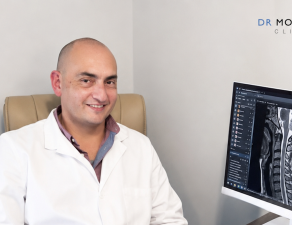
As Dr. Bernardo Mosqueira explains: "When a patient tells us that they can walk for a certain amount of time and then need to sit down because their legs start to hurt or feel heavy, that pattern gives us a lot of information during the diagnosis."
Why does lumbar stenosis improve when sitting or bending forward?
Spinal posture alters the space available to nerve structures. When walking upright or standing, some people with lumbar stenosis experience an increase in their symptoms. Sitting or bending slightly forward can increase the space available to the nerves and temporarily decrease discomfort. For this reason, some patients find they can walk further when using a shopping cart, a support, or spontaneously adopting a slightly reclined posture. National Institute of Arthritis and Musculoskeletal and Skin Diseases (NIAMS)The United States agency lists among the symptoms of lumbar stenosis pain or burning that extends to the buttocks and legs, worsens when standing or walking, and improves when bending forward.
The pain may be felt in the buttocks, thighs, calves, or radiate to other areas of the leg. Tingling, numbness, or a feeling of weakness may also occur. These symptoms are related to the lumbar nerve compression which can cause narrowing. The limitation in walking can significantly alter daily life. Shopping, going for walks, traveling, or simply getting around town begins to depend on where there is a place to sit or how long the patient can stand.
The way symptoms appear and disappear also helps differentiate neurogenic claudication from other problems that can cause leg pain when walking, including certain circulatory disorders. Therefore, diagnosis requires a comprehensive evaluation, and interpreting only an MRI is insufficient.
How is it diagnosed and when is treatment considered?
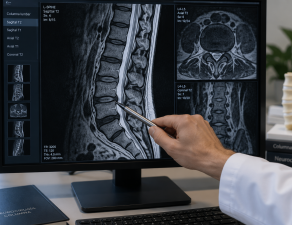
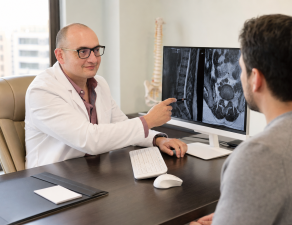
The assessment begins by carefully listening to how the symptoms have progressed. How far the patient can walk, what they feel in their legs, whether discomfort appears on both sides, and what posture brings relief are all very useful pieces of information. Next, a clinical and neurological examination is performed to assess strength, sensation, reflexes, and mobility. Magnetic resonance imaging (MRI) allows identification of the narrowing and to determine which structures are affected. However, there must be a correlation between the images and what the patient experiences. This combination forms the basis of a good assessment. diagnosis of spinal problems.
«The MRI shows the narrowing, but we need to consider the individual patient. Their walking limitations and physical examination are crucial in determining the best treatment.“Treatment is individualized according to the degree of limitation, neurological involvement, progression, and the impact of symptoms on quality of life,” explains Dr. Mosqueira. “In some patients, conservative measures and monitoring may be considered initially. When difficulty walking becomes increasingly limiting, symptoms persist, and there is compression that explains the clinical picture, it may be time to assess…” When is spinal surgery necessary?.
Is minimally invasive microsurgery a solution?
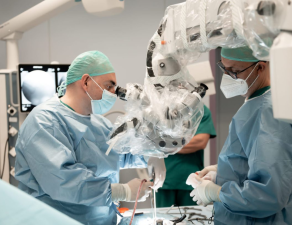
The goal of surgery for lumbar spinal stenosis is to release the compressed nerve structures. When indicated, the minimally invasive microsurgery It allows precise work on the area responsible for the compression using a surgical microscope and an approach adapted to each patient. The onset of rapidly progressing loss of strength, significant changes in sensation in the perineal area, or new alterations in bladder or bowel control require urgent medical evaluation. The relationship between lumbar stenosis and difficulty walking This demonstrates once again that diagnosis must begin with how the disease affects the individual. MRI is essential, but the distance the signal travels, the progression of symptoms, and the neurological examination complete the information needed to decide on treatment.
At Clínica Dr. Mosqueira, we assess patients with lumbar spinal stenosis individually, analyzing the origin of their symptoms and the impact they have on their mobility and quality of life.
Dr. Mosqueira Clinic | Malaga
655 021 907 | 951 006 638
Frequently asked questions about lumbar stenosis and difficulty walking
Narrowing of the canal can reduce the space available for nerve roots and cause pain, heaviness, tingling, numbness, or weakness in the legs while walking.
Sitting or leaning forward changes the position of the spine and can increase the space available for nerve structures, temporarily reducing symptoms.
Yes. Some people with neurogenic claudication find relief when walking slightly leaning forward, such as when leaning on a shopping cart.
The diagnosis combines medical history, neurological examination, and imaging tests such as magnetic resonance imaging (MRI). The correlation between symptoms, examination findings, and imaging is crucial.
It can be assessed when the symptoms produce a significant and persistent limitation, there is compression compatible with the clinical picture, or a neurological impairment appears that requires specific treatment.